
Retreat & Camp Growth Roadmap Focus Area: Unify Lead Communications
Introduction
If you run a retreat center or camp, chances are you and your team are doing your very best to stay on top of every inquiry. You answer emails, return calls, reply to texts, and even check your social media messages. You may even keep notes and reminders to stay organized. Yet no matter how hard you try, things still slip through—an unanswered voicemail, a delayed email reply, a missed text on someone’s personal phone.
Because communication feels like “just part of the job,” we rarely stop to think of it as a strategic opportunity. But every one of those everyday interactions—how you handle them, how you store them, how you recall them later—shapes how guests perceive your ministry. Done well, communication builds trust and lasting relationships. Done poorly, it frustrates group leaders and quietly costs you bookings—and sometimes, ministry opportunities.
Why This Focus Area Matters
Leads that go unanswered don’t just represent lost revenue—they represent groups of people who miss the chance to experience the space you’ve created for rest, connection, and renewal.
This isn’t about lack of effort. Many retreat and camp staff are earnest, committed, and careful. But with part-time schedules, seasonal staff, and inevitable turnover, it’s simply too easy for a message to be lost or for two staff members to unknowingly give different answers.
A youth pastor sends an email on Monday, a quick text on Tuesday, and leaves a voicemail on Wednesday. Staff reply to the email but never see the text, and the voicemail sits on a seasonal staffer’s cell phone. To the pastor, it feels like their questions weren’t important enough to answer—and by Friday, they’ve booked with another camp.
Unified communications prevent situations like this. They allow every team member to see the same conversation thread, making sure each lead is heard, cared for, and given the attention they deserve.
The Cost of Disconnected Communication
When communication is scattered, even the best teams stumble. Some common pitfalls include:
- Missed Messages: An inquiry buried in an inbox or left on voicemail never makes it back to the team. A school group calls about bringing 100 students for a fall retreat. The message gets left on the program director’s cell. He’s out sick for a week. By the time he sees it, the school has already booked elsewhere.
- Duplicate Replies: Two staff members answer the same email differently, leaving a poor impression. One staffer offers a discount, another doesn’t mention it. The group feels confused and questions whether the camp is organized enough to host them well.
- Lost History: When staff move on, their inbox history goes with them. A new coordinator fields a rebooking call from a men’s group. He has no record of the room setup and AV needs they discussed last year. The leader sighs, “I already went over this with someone before.”
- Time Drain: Toggling between email, text, Facebook Messenger, and phone logs takes longer than simply following up. A part-time admin spends half her shift just piecing together which inquiries were answered and which weren’t, leaving her discouraged.
- Slow Response Times: Without unified systems, new inquiries can sit for days before anyone realizes they’re waiting. A church group leader fills out a website form on Friday. By the time the admin sees it Tuesday, the group has already committed elsewhere.
- Inconsistent Promises: When different staff communicate across different channels without visibility, the tone or promises vary. One staffer assures a group that late checkout is possible, another later says it isn’t. The group feels misled, even though both were trying to help.
Each of these breakdowns chips away at trust. What may feel like a small misstep on your end can feel to a group like a sign their retreat won’t be handled with the same care they hoped for.
What About Our Current Camp Management System?
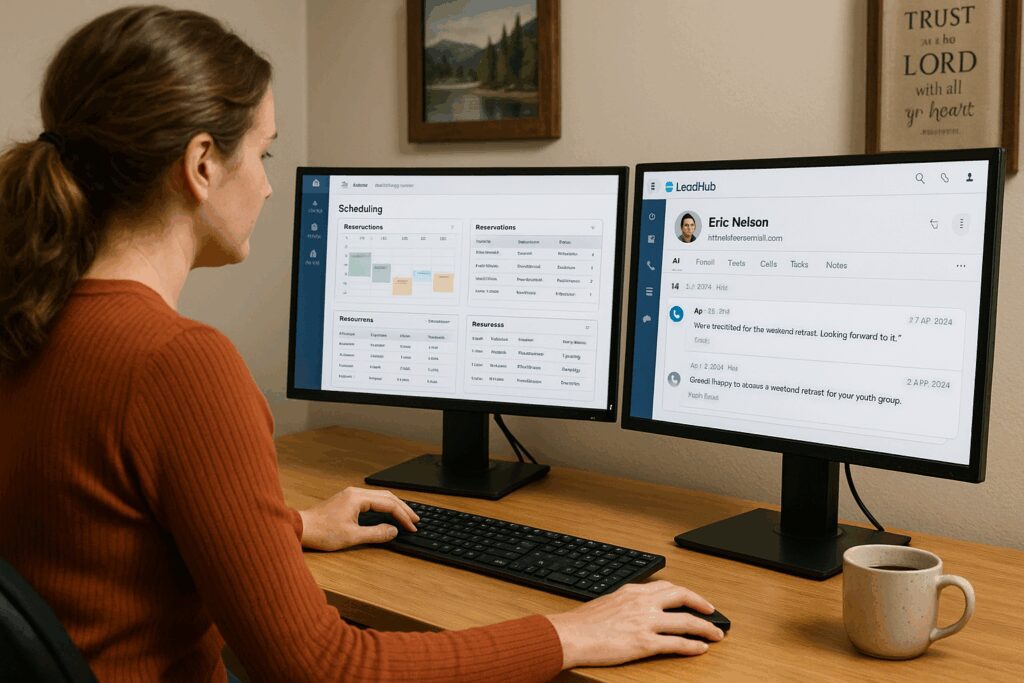
Most retreat centers and camps already have a management system—and it’s invaluable. These systems handle reservations, staffing schedules, pricing, capacity, and resource allocation. They are the backbone of your operations.
The issue is not with what they do—it’s with what they don’t do. While many camp management systems advertise “CRM functionality,” those features are often limited to storing basic contact information. They don’t unify all your communication channels—email, text, phone, and social—in a single thread.
This creates a gap. Your management system may know that the Smith Family reserved 20 cabins in July. But it won’t show that the group leader sent three texts asking about catering or that she called last spring about changing her dates.
The truth is, operations systems and communication systems serve different purposes. You need both: one to run the logistics, and another to steward guest relationships well.
Putting This Focus Area into Practice
Centralize All Channels
When communication channels are in different places, messages get missed and responses are delayed. Centralizing them into one system ensures every inquiry shows up in the same place, no matter how it comes in.
At one camp, a parent sent a Facebook message asking about dietary needs. The social account wasn’t checked for three days, and by the time staff responded, the family had already booked elsewhere. In contrast, another center using a unified system saw that same kind of message appear right alongside the group’s original email inquiry. The staff replied within hours, earning the family’s trust and securing the booking.
Centralization is the first building block—it makes sure every inquiry, no matter how it begins, is captured in one reliable place.
Keep the Whole Team in Sync
Even with good systems, teams often work in silos. One person answers emails, another takes calls, a third manages texts—and none of them see what the others have done. This creates confusion for both staff and guests.
A retreat center director once called a youth pastor about AV needs while the admin unknowingly emailed the same leader asking the same questions. The group sensed disorganization and grew hesitant. Another center with a unified CRM avoided this problem. When the youth pastor’s call was logged on Tuesday with a note, the admin saw it immediately. Instead of repeating the question, she sent a warm confirmation email, reinforcing the professionalism of the team.
When the team is aligned, guests sense it immediately. Consistency builds confidence, and confidence builds trust.
Build a Relationship History
Groups return when they feel remembered and valued. But that memory often lives in the inbox of whoever handled the booking last year. If that person has moved on, all the context is gone.
One men’s group tried to rebook, but the new coordinator had no record of their room setup, dietary needs, or preferred schedule. The leader felt like a stranger instead of a returning guest. By contrast, a different camp using a unified system could pull up the full history: which rooms they used, the special requests made, and even notes from their post-retreat feedback. The new coordinator referenced those details in the first call, and the leader felt known and cared for.
This is what transforms a one-time guest into a long-term partner.
CRMs as the Tool for Unification
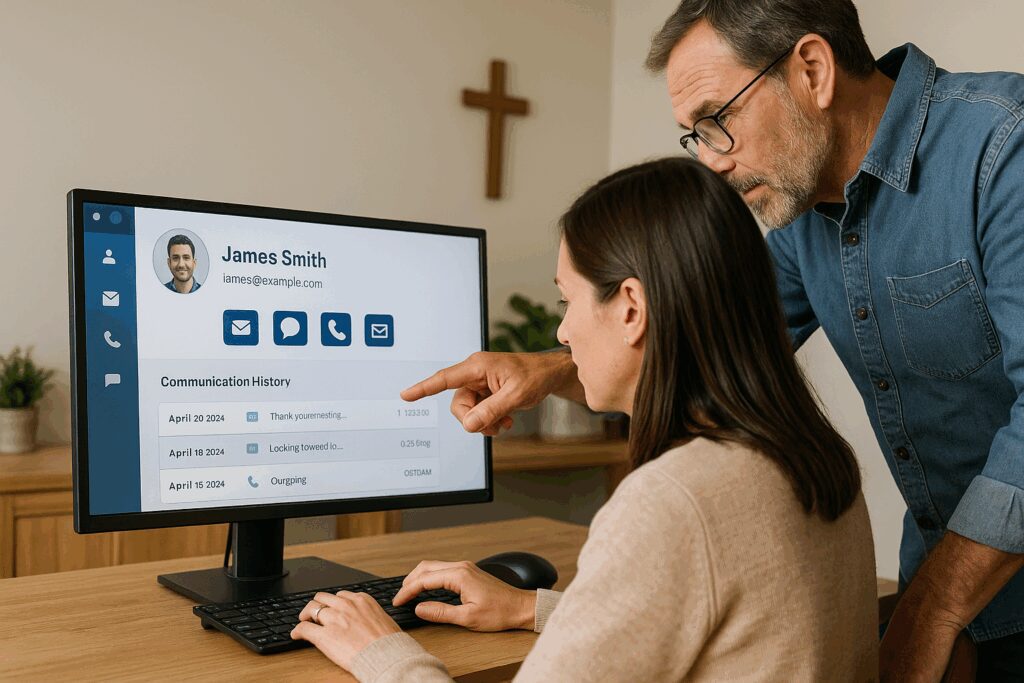
This kind of visibility and record-keeping doesn’t happen with sticky notes or shared inboxes. It requires a system designed for communication. A Customer Relationship Management (CRM) system can unify email, text, phone, and social channels into one record, accessible by the whole team.
Not all CRMs do this well. Some only handle email. Others require separate add-ons for texting or calling. A few don’t integrate with your camp management system, which leaves you juggling tools again.
One camp director tried to make a generic CRM work, but it only tracked emails. As more group leaders began texting, those conversations vanished into personal devices. Leads still slipped away. Another center adopted a CRM with native texting, calling, and email integration. When a group leader texted about availability, it appeared in the same thread as their past emails. The staff responded within minutes, and the group booked right away.
A CRM doesn’t just store data—it protects the relationships your ministry depends on.
Choosing the Right CRM: Lead Hub CRM
The right CRM should unify channels, preserve history, integrate smoothly with your existing camp management system, and reduce complexity. One example that delivers on these requirements is Lead Hub CRM. Unlike most systems that only cover one or two channels—or that force you to patch together multiple apps—Lead Hub CRM natively unifies email, text, phone, and social media messaging in a single, easy-to-use platform.
It doesn’t replace your camp management system—it complements it. While your management software continues handling reservations and logistics, Lead Hub CRM ensures no communication is ever lost, duplicated, or forgotten. Together, they give you both operational efficiency and relationship stewardship.
Unified Lead Communications Planning Worksheet
Many retreat and camp leaders know communication can feel scattered, but it’s hard to put your finger on exactly where things are breaking down. The Unified Lead Communications Planning Worksheet is designed to help you see your current reality clearly and talk about it with your team. It gives you space to map out how inquiries flow through your organization today, where the gaps and frustrations appear, and how those small cracks add up to lost opportunities. By slowing down long enough to name what’s happening, you’ll be better equipped to take practical steps toward a system that supports your ministry instead of straining it.
📥 Download the Unified Lead Communications Planning Worksheet
This worksheet is more than an exercise—it’s a starting point for change. By walking through each step, you’ll uncover not just where things go wrong, but also how much potential there is when communications are unified and visible to the whole team. Even one small improvement can save time, reduce stress, and reassure group leaders that they are cared for from the very first inquiry. Use your answers here as a springboard for your next conversation with your staff about strengthening guest relationships and stewarding every inquiry with excellence.
Mini Case Study
A Christian retreat center had always prided itself on personal attention. Their director, staff, and volunteers were deeply committed to caring for every group that inquired. But behind the scenes, communication was messy. Emails lived in one inbox, texts were handled on staff cell phones, and voicemails piled up on a shared office line. Despite good intentions, messages slipped through the cracks.
One spring, a local Christian school reached out about bringing 200 students for a fall retreat. The inquiry came in as a phone message, followed by an email, and later a text. Staff responded to the email but missed the text and voicemail. By the time they pieced it together, the school had already confirmed with another camp. Losing that group meant more than a lost booking—it meant dozens of students missed the chance to experience the retreat center’s ministry.
Recognizing the gap, the retreat center decided to unify their lead communications. They adopted a system that integrated email, text, calls, and even social messages into one thread. Now, when a group leader inquires, the entire team sees the complete history in one place.
Within weeks, the difference was obvious. A men’s ministry leader texted about rebooking, and the coordinator could immediately see all of his past communications—including his specific requests for room layouts and activities. The coordinator responded quickly and referenced those details, which left the leader both impressed and reassured. He later told the director, “I feel like you really know us.”
Since implementing unified communications, this retreat center hasn’t just reduced missed messages—they’ve built deeper trust with their guest groups. The team is less stressed, leaders feel more cared for, and inquiries turn into bookings more consistently.
Your center could experience the same shift, moving from good intentions that sometimes fall short, to a system that consistently reflects the care you want every guest to feel.
Putting It All Together
Communication might feel ordinary, but it shapes how your ministry is perceived. Scattered tools create disconnects. Unified systems create clarity, professionalism, and trust.
Here are 5 practical takeaways:
- Bring all channels—email, text, phone, and social—into one place.
- Eliminate missed messages and duplicate responses.
- Preserve history across staff turnover.
- Save time by reducing scattered systems.
- Strengthen long-term guest relationships through consistent, caring follow-up.
Imagine opening a single record and seeing the complete story of your relationship with a group—past questions, notes, and preferences—all in one place. That’s the power of unified communication.
Ready to Take the Next Step?
Strong communication isn’t just a “nice to have”—it’s the backbone of lasting guest relationships. By unifying your lead communications, you make it easier for your team to serve well, follow up faithfully, and steward every inquiry with care.
If you found this helpful, here are four great next steps to continue your journey:
🧭 Move to the Next Focus Area: Implement Sales Pipeline
Learn how to track leads from first inquiry to rebooking and make sure no opportunity is lost.
[Read the Implement Sale Pipeline Focus Area Article]
📘 Download the Retreat & Camp Growth Roadmap eBook
Get the full 3-stage system we use to help retreat centers and camps grow with clarity and purpose.
[Download the eBook]
🌱 Learn More About How We Help Retreat Centers & Camps
We’re a Christian-owned digital marketing agency that helps retreat centers and camps grow attendance, bookings, and impact through practical strategies rooted in clarity and stewardship.
[See How We Can Help]
🤝 Schedule a Free Discovery Call
Want help applying this to your unique situation? Let’s talk. We’ll explore where you are now, where you want to go, and how to take the next faithful step.
[Book a Discovery Call]
You don’t have to figure this out alone. Let’s build something meaningful—together.
Frequently Asked Questions
What does “unified communications” mean in practice?
It means pulling all your communication channels—email, text, phone, and even social media messages—into a single system where your team can view and respond. No more toggling between apps or relying on personal devices.
Why isn’t email alone enough?
Email covers part of the picture, but many groups prefer texting or messaging through social platforms. If those channels aren’t connected, you risk missing or duplicating messages.
How is this different from my camp management system?
Camp management systems are excellent for logistics like reservations and scheduling. But their CRM features are often limited. They rarely unify all communication channels or maintain a rich relationship history. That’s where a dedicated CRM complements your existing system.
Do I need to replace my camp management system?
No. This is not about replacement—it’s about integration. Keep your current system for operations, and pair it with a CRM that strengthens your communication and guest relationships.
How does this help with part-time or seasonal staff?
Unified systems mean every staff member—new or temporary—sees the same history. They can step in mid-season and pick up where others left off, without losing context.
What if our groups prefer texting?
That’s the point of unification: texts appear in the same record as emails and calls, so nothing is overlooked. Your team can reply directly from the CRM while keeping the history intact.
Can this support rebooking?
Yes. Having past communication history makes rebooking easier. You know what worked for a group before and can build on that relationship.
How complicated is setup?
Most unified CRMs can be implemented without disrupting your current system. The right solution should integrate smoothly and reduce, not add, complexity.
Will this support our retreat marketing strategies and SEO for camps?
Absolutely. SEO for camps and retreat marketing ideas are great for generating leads. A unified CRM ensures those hard-won inquiries are followed up consistently and converted into bookings.
What makes Lead Hub CRM different from other CRMs?
Most CRMs either lack multi-channel functionality or require patching together several apps. Lead Hub CRM offers native unification, reducing costs and complexity while giving you one reliable place to manage guest communications.
How does unified communication help us fulfill our mission better?
When every inquiry is answered quickly and consistently, group leaders feel valued. That trust often makes the difference in whether they choose your center. More bookings mean more people experiencing the ministry you’ve built—and fewer missed opportunities to serve.