
Retreat & Camp Growth Roadmap Focus Area: Execute On-site SEO
Introduction
Search engine optimization (SEO) may sound technical, but at its core it simply means making your website easier to find on Google. When someone searches “Christian retreat center near me” or “youth camp rentals in [your state],” SEO is what helps your center show up and get chosen.
There are three main parts to SEO. On-site SEO—the focus of this article—is about improving the content, structure, and health of your own website. Off-site SEO covers reviews and links from other sites pointing to you, while Local SEO strengthens your visibility in maps and local listings.
Of these, on-site SEO is where you have the most control. Think of it as regular maintenance for your website: keeping content fresh, fixing issues, and making sure the right groups can find you and take the next step to book.
Why This Focus Area Matters
A neglected website is like an unmarked entrance road: people might pass by, but they’ll never know what’s inside. When your site loads slowly, uses outdated information, or doesn’t show up in searches, you miss opportunities to serve.
Consistent on-site SEO makes your retreat or camp easier to discover and easier to trust. It’s not about chasing every click. It’s about connecting with the right groups—youth leaders, schools, churches, and ministries that align with your mission. Done faithfully, it’s an act of stewardship: caring for the digital front door of your ministry.
Is This an Area You Need to Focus on Right Now?
- Do you know where your site ranks for your top retreat or camp offerings?
- Do you review website performance at least once a quarter?
- Is someone responsible for keeping your content accurate and up to date?
- Do you have a rhythm for improving and adding to your site?
If you answered “no” to any of these, now is the time to focus here.
Putting This Focus Area into Practice
Establish a Regular SEO Review Cycle
On-site SEO works best when it becomes a habit. A healthy rhythm is to run a full site audit every quarter and to choose one page each month to refresh. For example, in January you might review your “Youth Retreats” page, in February your “Leadership Retreats” page, and in March your “Family Retreats” page. Over time, these small touches build momentum and prevent bigger issues from piling up.
Measure What Matters with Analytics and Search Console
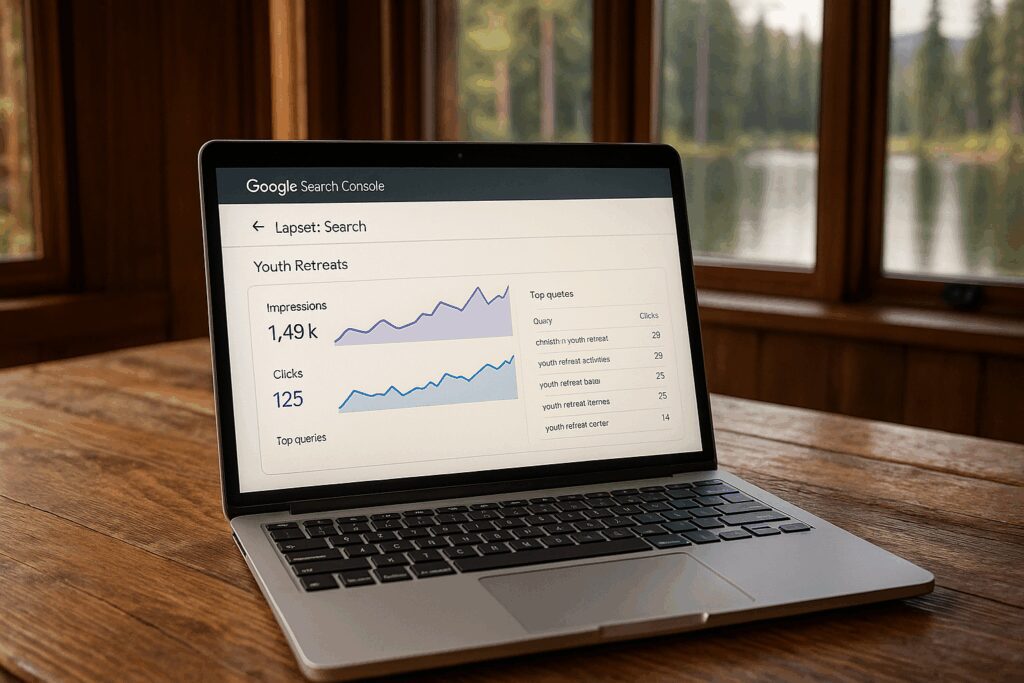
Free tools like Google Analytics and Google Search Console make it possible to track progress without guesswork. Search Console shows what people are typing to find you, which pages are getting clicks, and whether Google can properly index your site. Analytics shows the bigger picture: how many people are visiting from search, how long they stay, and which pages they explore.
The key is not to get lost in dashboards but to look for patterns. A simple routine works: check Search Console once a month for search queries and errors, and review Analytics quarterly for trends in organic traffic and engagement. For example, if you see “youth camp retreats in Ohio” showing impressions but few clicks, it’s a signal to improve your youth retreat page with clearer titles and stronger calls-to-action.
Monitor Technical Health
Good SEO is more than words on a page—it’s also how your site performs. Keep an eye on speed, especially on mobile, since many group leaders will first view your site from their phone. Make sure your most important retreat and inquiry pages are being indexed by Google. Compress large images to help pages load faster, fix broken links that frustrate users, and add simple structured data so Google understands your pages are about events and retreats.
One retreat center discovered their inquiry form wasn’t being indexed at all. A small technical fix immediately opened the door for new inquiries.
Optimize and Expand Content Continuously
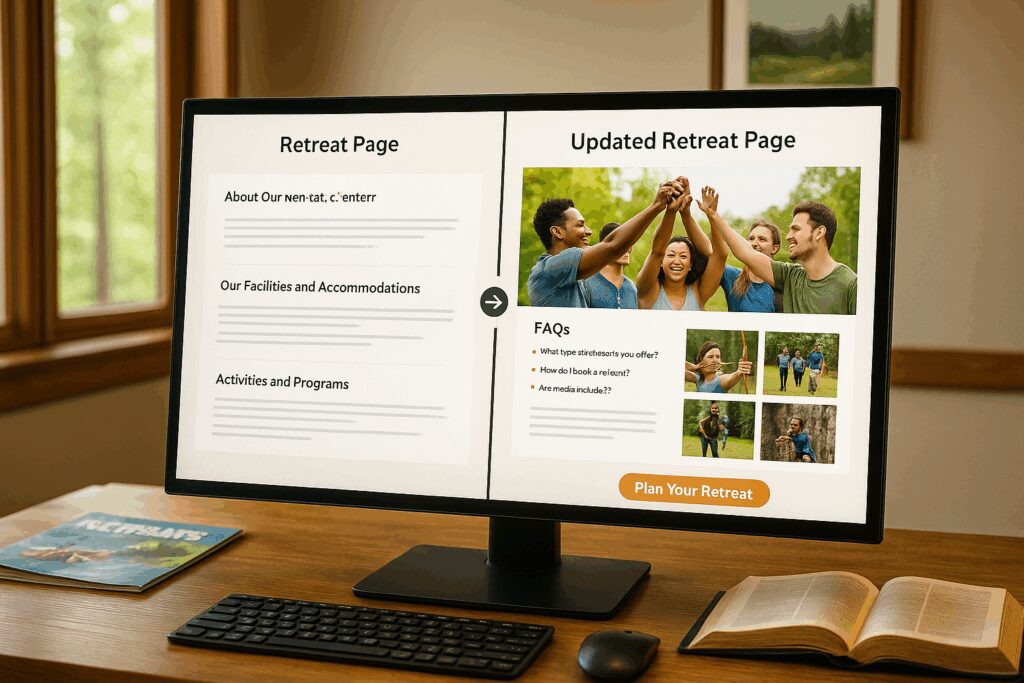
Your best opportunities are often on the pages you already have. Each month, revisit one page and look for ways to make it more useful: add a FAQ section, update outdated photos, or strengthen the description of your facilities. Use Search Console data to identify new topics and create supporting content, such as packing guides, sample schedules, or activity lists that link back to your main retreat pages.
For instance, if you notice people searching “what to pack for a youth retreat,” publishing a simple packing list can boost visibility and help group leaders feel more prepared.
Improve User Experience Along the Way
Search engines reward websites that serve people well. That means guiding visitors with thoughtful internal links, consolidating thin or duplicate pages into stronger ones, and retiring outdated content that creates confusion. The easier it is for people to find what they need and take the next step, the stronger your SEO results will be.
Resource Your SEO Effort Wisely
You don’t need a large budget to make progress. Many improvements—like updating content, fixing broken links, or adding new FAQs—can be done internally if you set aside time each month. But there are moments when outside help makes sense, especially for technical audits, structured data, or advanced keyword strategies.
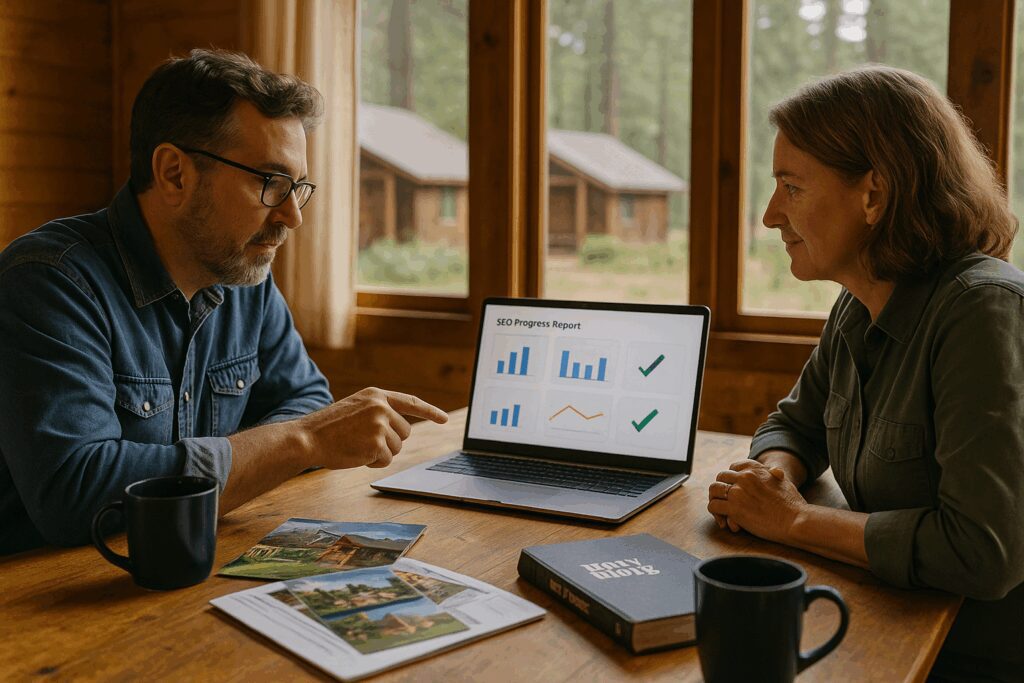
Whether you keep the effort in-house or partner with a marketing agency specializing in retreats and camps, leadership should stay involved. Set a few clear goals, such as improving visibility for school retreats or increasing inquiries from churches. Hold short monthly check-ins with your SEO lead or partner to review progress and celebrate wins. Encourage collaboration between marketing, program staff, and guest services so that your content reflects real guest questions and experiences. This balance of accountability and encouragement keeps the effort on track.
Keep a Running SEO Task List
Finally, treat your website like your campus: keep a running list of tasks and tackle them steadily. One month it might be refreshing the photos on your women’s retreat page. The next month, fixing broken links on your youth retreat page. The following month, writing a blog to answer a new question. Consistency, not intensity, is what makes the difference.
On-site SEO Planning Worksheet
Keeping up with on-site SEO can feel overwhelming if you don’t have a clear system. The On-site SEO Planning Worksheet is designed to simplify the process by giving you a practical set of questions and prompts to guide your monthly, quarterly, and ongoing reviews. Instead of wondering what to look at or where to start, you’ll have a simple roadmap for keeping your website healthy, visible, and welcoming to the right groups.
📥 Download the On-site SEO Planning Worksheet
This tool is meant to become part of your rhythm, not a one-time checklist. Whether you print it and keep it in a binder, or use it digitally with reminders on your calendar, the goal is to help you build habits that strengthen your online presence over time. Think of it as your maintenance logbook for the digital side of your ministry.
Mini Case Study
One retreat center we worked with had an outdated website. They offered a wide range of programs and services, but their site wasn’t showing up in searches for important terms like youth retreats or church retreats. With no budget for a redesign, they worried that their online presence would continue to limit growth.
Instead of waiting for a major overhaul, we focused on improving what they already had. We addressed technical issues, expanded and refreshed key content, improved the internal linking structure, and updated page titles and meta descriptions. These steady, practical updates made the site easier for both guests and search engines to navigate.
The results were clear: organic traffic grew significantly, retreat inquiries increased, and more bookings followed. The added revenue from these improvements eventually helped fund a full website redesign and further marketing efforts.
👉 Read the full case study here.
Putting It All Together
On-site SEO is never “done.” But steady, faithful effort—quarterly audits, monthly updates, and routine fixes—keeps your website strong. Over time, this rhythm leads to more inquiries, smoother guest experiences, and deeper alignment with your mission.
Key Takeaways
- Quarterly audits prevent small problems from blocking bookings.
- Monthly reviews keep priority pages fresh and visible.
- Technical fixes improve speed, mobile usability, and indexing.
- Updated content and internal links make it easier for guests to engage.
- A simple task list makes SEO part of your team’s rhythm.
Ready to Take the Next Step?
Consistent on-site SEO turns your website into a steady, welcoming front door. Start small, keep at it, and you’ll build momentum that fills your calendar and supports your mission.
If you found this helpful, here are four great next steps to continue your journey:
🧭 Move to the Next Focus Area: Unify Lead Communications
Learn how to streamline and centralize your guest inquiries so no opportunities fall through the cracks and every lead gets timely follow-up.
[Read Unify Lead Communications Article]
📘 Download the Retreat & Camp Growth Roadmap eBook
Get the full 3-stage system we use to help retreat centers and camps grow with clarity and purpose.
[Download the eBook]
🌱 Learn More About How We Help Retreat Centers & Camps
We’re a Christian-owned digital marketing agency that helps retreat centers and camps grow attendance, bookings, and impact through practical strategies rooted in clarity and stewardship.
[See How We Can Help]
🤝 Schedule a Free Discovery Call
Want help applying this to your unique situation? Let’s talk. We’ll explore where you are now, where you want to go, and how to take the next faithful step.
[Book a Discovery Call]
You don’t have to figure this out alone. Let’s build something meaningful—together.
Frequently Asked Questions
What’s the difference between on-site SEO and technical SEO?
On-site SEO covers content, keywords, images, and navigation. Technical SEO is a subset that focuses on site speed, mobile usability, indexing, and structured data. Both are needed for visibility.
How often should we update our site?
Refresh at least one key page per month and run a full site audit each quarter. This steady rhythm keeps your site healthy.
Do we need a blog to succeed?
Not necessarily. Updating your main retreat pages consistently can go a long way. Blogs are helpful for answering specific guest questions or capturing seasonal interest.
What Analytics metrics matter most?
Focus on organic sessions (are more people finding you?), bounce rate (are they staying?), and landing pages (are retreat pages where they start?). These give you clarity without overwhelm.
How should we use Search Console?
Once a month, check your top search queries, clicks, and any indexing errors. Use that insight to pick the next page to refresh or a new content idea.
What’s one simple SEO win for this month?
Fix a broken link, refresh one page with new content and a stronger call-to-action, and compress large images.
Should we optimize every page?
No. Focus on your top retreat offerings, inquiry pages, and highest-traffic blogs first. Add others gradually.
When should we consider outside help?
If your team lacks capacity, if progress stalls, or if technical issues block you. Look for camp marketing agencies with group retreat marketing experience.
How long before results show?
Expect small signs in 3–6 months and more substantial gains in 6–12 months. SEO builds slowly but compounds over time.