
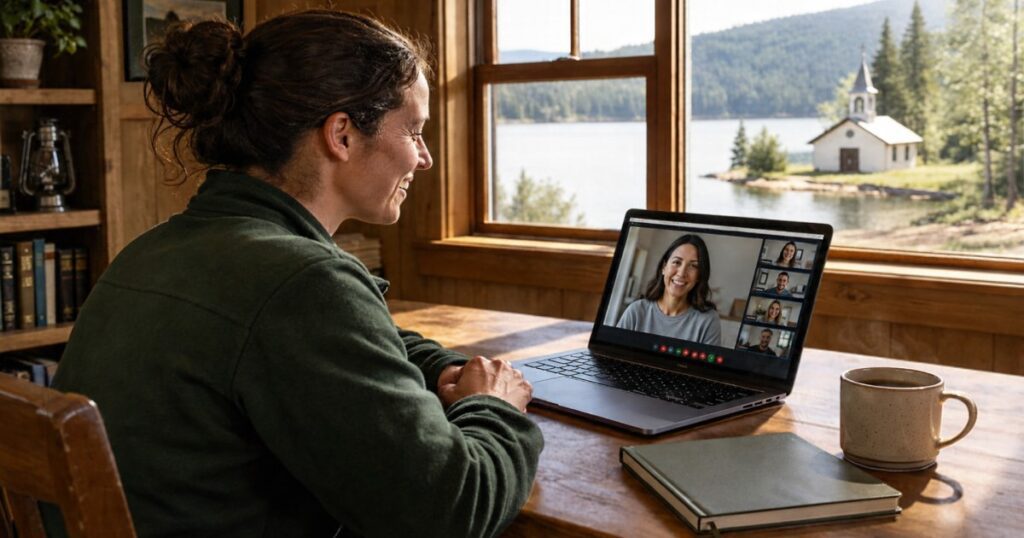
If you want to prep for a discovery call or tour with a retreat group, start with what you already know about them. A few minutes of organizing the inquiry, your notes and your own camp facts gives you better questions and a calmer conversation. This is Day 8 of 30 Days of AI for Camps, and today ChatGPT or Claude does the organizing while you stay the one who knows your camp.
Why does prep make the call better?
Most groups don’t call with a perfect list of needs. They call with a date idea, a rough headcount and a few worries. The leader who walks in knowing what the group already said can spend the time listening instead of scrambling. Prep also keeps you from burying them in everything your camp offers when they only need two or three things.
What do you gather first?
Pull together whatever you have, even if it’s messy:
- The original inquiry or form submission
- Any emails back and forth
- Your camp fact sheet from Day 2
- Anything you know about the group, like past events or their website
Don’t clean it up. Paste it as it is. Remove anything private you wouldn’t want in an AI tool, such as phone numbers or payment details.
How do you ask AI to prep you?
Here is a prompt you can copy and adjust:
I’m the director of a Christian camp and retreat center. I have a discovery call [or tour] with a group coming up. Below are their inquiry, our emails so far, and our camp fact sheet. Please: (1) summarize what they’ve told us in a few lines, (2) list what we still don’t know, (3) suggest eight open-ended questions in a warm, conversational tone, (4) point out which parts of our camp seem most relevant to them based only on what they’ve said, and (5) list anything I should be ready to answer honestly, like pricing, dates or space. Use only the information I’ve provided. If something is missing, say so instead of guessing.
The last line matters. It keeps the AI from inventing details about the group or about your camp.
What does that look like in ChatGPT and Claude?
In ChatGPT, paste the prompt and your notes into a new chat, or use a Project that already holds your voice notes and fact sheet. In Claude, do the same in a new chat or a Project. Either way, read the results with your own eyes. Cross out any question that doesn’t fit, and add one of your own. The goal is a short page of notes you trust, not a script.
How do you prep for a tour?
A tour is a discovery call that happens while walking. Ask the AI to turn your notes into a simple route: which spaces to show first, what story or detail to share at each stop, and one question to ask along the way. Keep it to the places that match what the group told you. If they said they need a quiet room for worship, skip the climbing wall and spend time at the chapel.
What should you watch out for?
- Don’t let AI invent group details. If it suggests something about their size or goals that they never said, delete it.
- Keep your facts current. Check dates, rates and capacity against your own records before you quote them.
- Listen more than you plan. The prep is there so you can be present, not so you can stick to a list.
- Follow up soon. Jot a few notes right after the call while it’s fresh.
Ready to try it today?
Pick one group you’re about to talk to, paste in what you have, and run the prompt. Spend ten minutes editing the questions so they sound like you. Then walk into the call knowing what they need.
Tomorrow, in Day 9, we’ll write a note to past guests so the groups who already love your camp hear from you.